2026 NBA Mock Draft: BYU's AJ Dybantsa is top pick, edging out Duke's Cameron Boozer, Kansas' Darryn Peterson
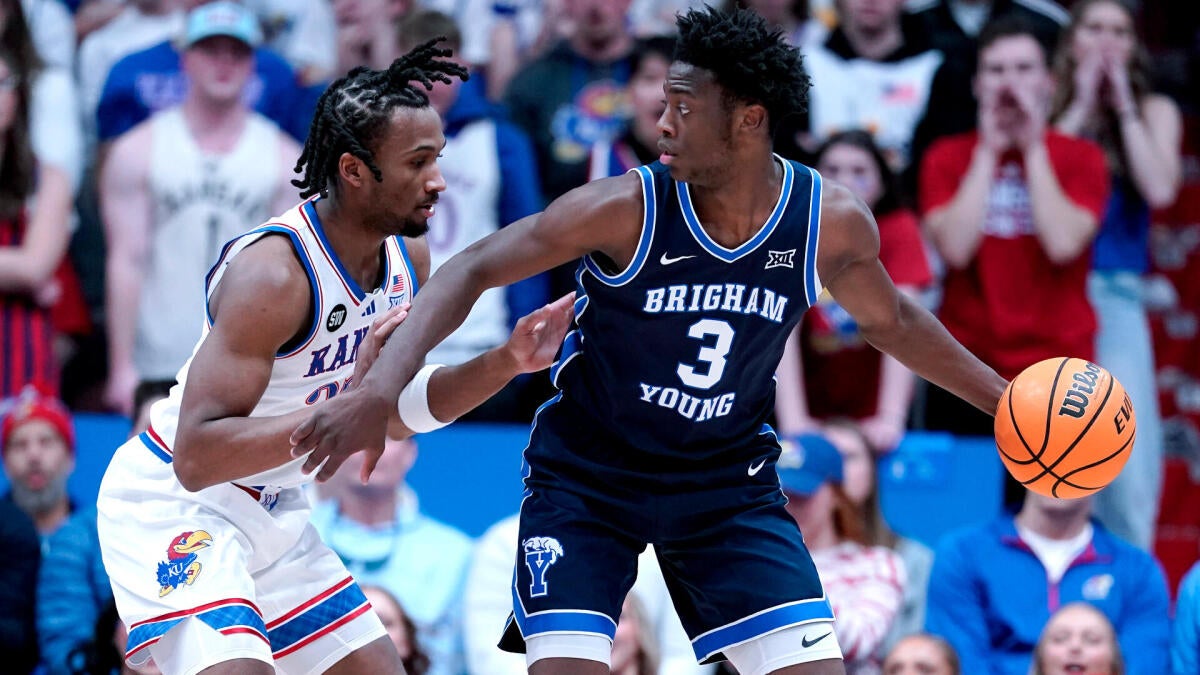
A new early look at the 2026 NBA Draft board has BYU’s AJ Dybantsa nudging ahead of Duke’s Cameron Boozer and Kansas’ Darryn Peterson, and the order at the top says plenty about how the league is evolving.
Dybantsa, a dynamic wing with prototypical size and fluid athleticism, is currently viewed as the kind of perimeter scorer and switchable defender franchises build around. Scouts are drawn to his ability to create his own shot, operate comfortably with or without the ball, and guard multiple positions. In a league increasingly driven by jumbo wings who can initiate offense, Dybantsa checks nearly every modern box, which explains why he’s emerging as the favorite for No. 1.
Boozer, however, is far from a consolation prize. The Duke standout projects as a franchise cornerstone in his own right, blending advanced feel with a powerful frame and polished interior game. What keeps him in the conversation for the top pick is his versatility: he can function as an offensive hub, impact the glass, and anchor lineups on both ends. For front offices that still value a dependable frontcourt engine who can scale up in the playoffs, Boozer is an enticing alternative.
Peterson, slotted just behind them, profiles as the elite backcourt scorer in this class. The Kansas guard’s appeal lies in his three-level scoring potential and comfort with the ball in high-leverage moments. Teams looking for a primary creator who can bend defenses with dribble penetration and perimeter shot-making will see him as more than a distant third.
The early hierarchy of Dybantsa, Boozer, and Peterson reflects a broader league tension: the premium on versatile wings versus the enduring value of skilled bigs and dynamic guards. With roster-building models increasingly centered on adaptability, spacing, and defensive switchability, executives will be weighing upside, fit, and positional scarcity right up to draft night. For now, Dybantsa’s wing profile gives him the slightest edge, but the race at the top of the 2026 class is far from settled.
Dybantsa, a dynamic wing with prototypical size and fluid athleticism, is currently viewed as the kind of perimeter scorer and switchable defender franchises build around. Scouts are drawn to his ability to create his own shot, operate comfortably with or without the ball, and guard multiple positions. In a league increasingly driven by jumbo wings who can initiate offense, Dybantsa checks nearly every modern box, which explains why he’s emerging as the favorite for No. 1.
Boozer, however, is far from a consolation prize. The Duke standout projects as a franchise cornerstone in his own right, blending advanced feel with a powerful frame and polished interior game. What keeps him in the conversation for the top pick is his versatility: he can function as an offensive hub, impact the glass, and anchor lineups on both ends. For front offices that still value a dependable frontcourt engine who can scale up in the playoffs, Boozer is an enticing alternative.
Peterson, slotted just behind them, profiles as the elite backcourt scorer in this class. The Kansas guard’s appeal lies in his three-level scoring potential and comfort with the ball in high-leverage moments. Teams looking for a primary creator who can bend defenses with dribble penetration and perimeter shot-making will see him as more than a distant third.
The early hierarchy of Dybantsa, Boozer, and Peterson reflects a broader league tension: the premium on versatile wings versus the enduring value of skilled bigs and dynamic guards. With roster-building models increasingly centered on adaptability, spacing, and defensive switchability, executives will be weighing upside, fit, and positional scarcity right up to draft night. For now, Dybantsa’s wing profile gives him the slightest edge, but the race at the top of the 2026 class is far from settled.