
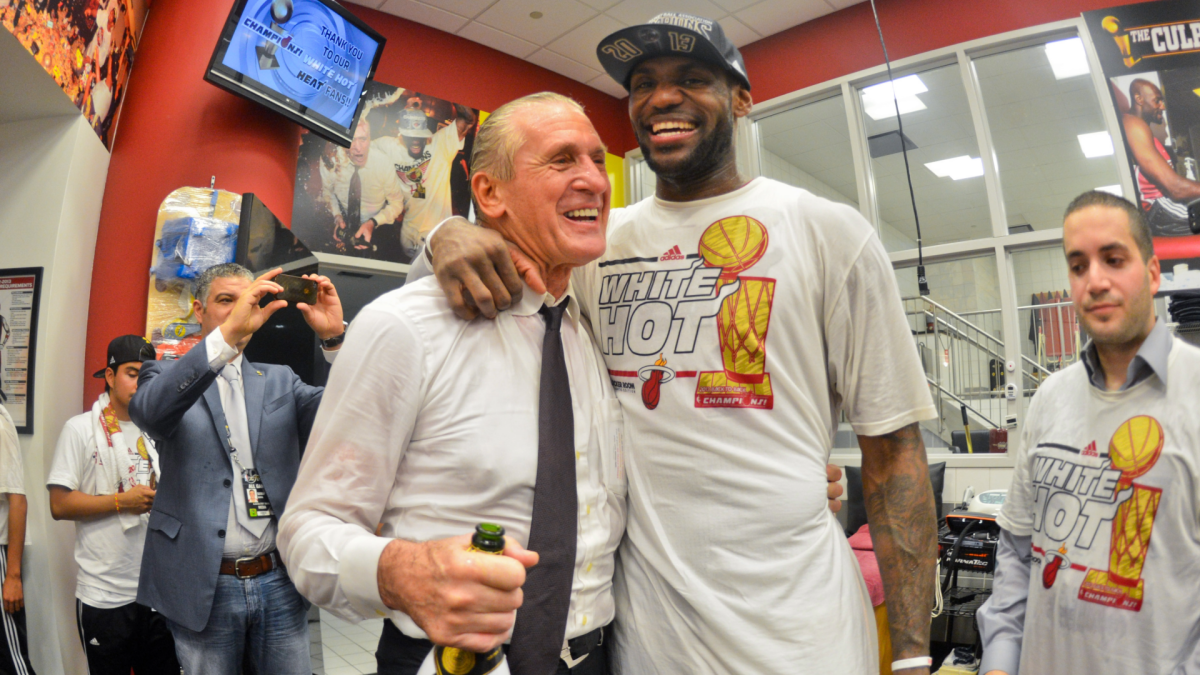
Pat Riley knows he had to 'let go' after LeBron James left Heat: 'I thought we were looking at a dynasty'
Pat Riley has never hidden that he imagined something far more enduring when LeBron James arrived in Miami. In his mind, the Heat were positioned for a long reign, the kind of extended dominance that defines eras. When James chose to leave, Riley has acknowledged that the most difficult but necessary step was learning to “let go” of that dynasty vision and recalibrate what Miami basketball would be.
For an executive who built champions in Los Angeles, New York, and Miami, the breakup of the Heat’s superteam was more than just a roster change. It was a philosophical jolt. Riley had constructed the franchise around the idea that multiple titles would follow once James, Dwyane Wade, and Chris Bosh joined forces. The infrastructure, culture, and cap strategy all pointed toward a prolonged run at the top of the league.
James’ departure forced Riley to confront a reality every modern front office faces: even the best-laid dynastic plans are fragile in an era where player empowerment and shorter contracts shape the landscape. Letting go, in this context, meant shelving the dream of a guaranteed dynasty and doubling down on what Miami could control: scouting, development, and the famed “Heat Culture” that prizes conditioning, accountability, and adaptability.
From a league-wide perspective, Riley’s reflection speaks to a broader shift. The NBA’s most successful organizations no longer chase dynasties as inevitabilities; they build flexible ecosystems that can survive a star’s exit and quickly pivot to the next iteration. Miami’s ability to remain competitive, reach the postseason consistently, and retool on the fly has become a model for how to endure after a superstar leaves.
Riley’s admission underscores a subtle evolution in executive thinking. The goal is still championships, but the path is less about locking in a single, decade-long core and more about sustaining a culture that attracts stars in cycles. The Heat didn’t get the dynasty Riley once envisioned, yet his willingness to release that expectation may be exactly why the franchise remains firmly in the NBA’s contending class.
For an executive who built champions in Los Angeles, New York, and Miami, the breakup of the Heat’s superteam was more than just a roster change. It was a philosophical jolt. Riley had constructed the franchise around the idea that multiple titles would follow once James, Dwyane Wade, and Chris Bosh joined forces. The infrastructure, culture, and cap strategy all pointed toward a prolonged run at the top of the league.
James’ departure forced Riley to confront a reality every modern front office faces: even the best-laid dynastic plans are fragile in an era where player empowerment and shorter contracts shape the landscape. Letting go, in this context, meant shelving the dream of a guaranteed dynasty and doubling down on what Miami could control: scouting, development, and the famed “Heat Culture” that prizes conditioning, accountability, and adaptability.
From a league-wide perspective, Riley’s reflection speaks to a broader shift. The NBA’s most successful organizations no longer chase dynasties as inevitabilities; they build flexible ecosystems that can survive a star’s exit and quickly pivot to the next iteration. Miami’s ability to remain competitive, reach the postseason consistently, and retool on the fly has become a model for how to endure after a superstar leaves.
Riley’s admission underscores a subtle evolution in executive thinking. The goal is still championships, but the path is less about locking in a single, decade-long core and more about sustaining a culture that attracts stars in cycles. The Heat didn’t get the dynasty Riley once envisioned, yet his willingness to release that expectation may be exactly why the franchise remains firmly in the NBA’s contending class.

