
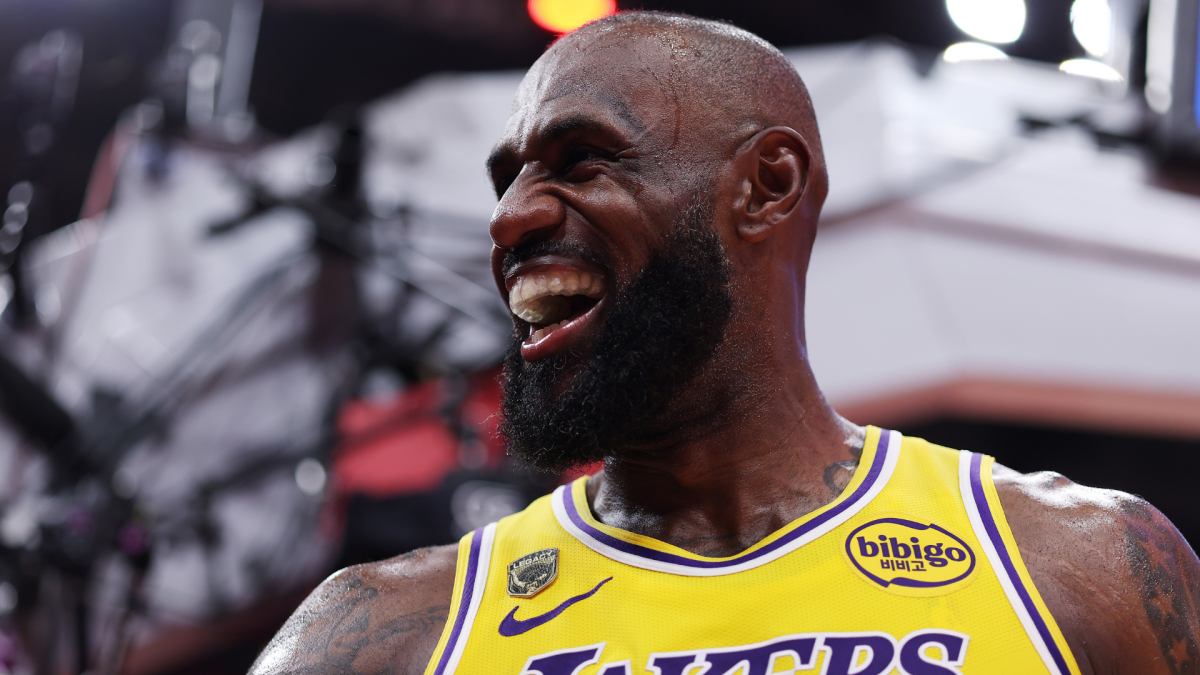
LeBron James didn't need a legacy series, but the dysfunctional Rockets were the perfect foil for one
LeBron James arrived at this postseason with nothing left to prove, yet the matchup in front of him offered the kind of narrative fuel that tends to define careers. He didn’t need a “legacy series.” The Houston Rockets, in their current combustible form, practically begged for one.
On one side stood a 39-year-old superstar whose résumé already bends any reasonable discussion about the greatest ever. On the other stood a Rockets team long on talent and bravado, short on cohesion and accountability. Houston’s blend of youth, volatility, and stylistic extremes made it the ideal backdrop for James to showcase the part of his greatness that often gets overlooked: his command of chaos.
The Rockets’ offensive philosophy, heavy on isolation and difficult shot-making, has always been vulnerable to a locked-in, detail-obsessed opponent. James is still that, even this deep into his career. He doesn’t just attack mismatches; he manufactures them. He doesn’t just read coverages; he rearranges them. Against a team that too often leans into drama and defensive lapses, his methodical approach looked almost clinical.
League-wide, this series felt like a referendum on two competing visions. Houston represents the impatient, personality-driven experiment, betting that raw talent and swagger can shortcut the slow work of building habits. James and his veteran-laden group embody the opposite: structure, communication, and the kind of situational intelligence that only comes from years of high-stakes basketball.
What elevates this from a routine first-round storyline into something closer to a legacy chapter is the context. James is operating in an era where young stars are rapidly ascending, superteams are constantly reshuffled, and patience is thinner than ever. Yet here he is, still dictating terms, still punishing undisciplined opponents who believe athleticism and pace can outrun his mind.
He didn’t require this stage to validate a historic career. But against a Rockets team unraveling in real time, LeBron James found the perfect foil to remind everyone that his greatest weapon has never been just his body. It’s his ability to bend an entire series to his will.
On one side stood a 39-year-old superstar whose résumé already bends any reasonable discussion about the greatest ever. On the other stood a Rockets team long on talent and bravado, short on cohesion and accountability. Houston’s blend of youth, volatility, and stylistic extremes made it the ideal backdrop for James to showcase the part of his greatness that often gets overlooked: his command of chaos.
The Rockets’ offensive philosophy, heavy on isolation and difficult shot-making, has always been vulnerable to a locked-in, detail-obsessed opponent. James is still that, even this deep into his career. He doesn’t just attack mismatches; he manufactures them. He doesn’t just read coverages; he rearranges them. Against a team that too often leans into drama and defensive lapses, his methodical approach looked almost clinical.
League-wide, this series felt like a referendum on two competing visions. Houston represents the impatient, personality-driven experiment, betting that raw talent and swagger can shortcut the slow work of building habits. James and his veteran-laden group embody the opposite: structure, communication, and the kind of situational intelligence that only comes from years of high-stakes basketball.
What elevates this from a routine first-round storyline into something closer to a legacy chapter is the context. James is operating in an era where young stars are rapidly ascending, superteams are constantly reshuffled, and patience is thinner than ever. Yet here he is, still dictating terms, still punishing undisciplined opponents who believe athleticism and pace can outrun his mind.
He didn’t require this stage to validate a historic career. But against a Rockets team unraveling in real time, LeBron James found the perfect foil to remind everyone that his greatest weapon has never been just his body. It’s his ability to bend an entire series to his will.


